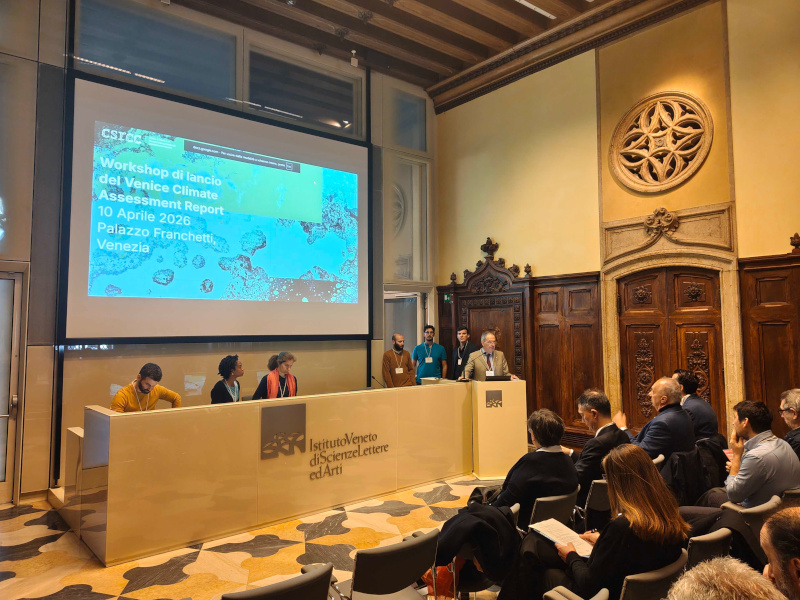
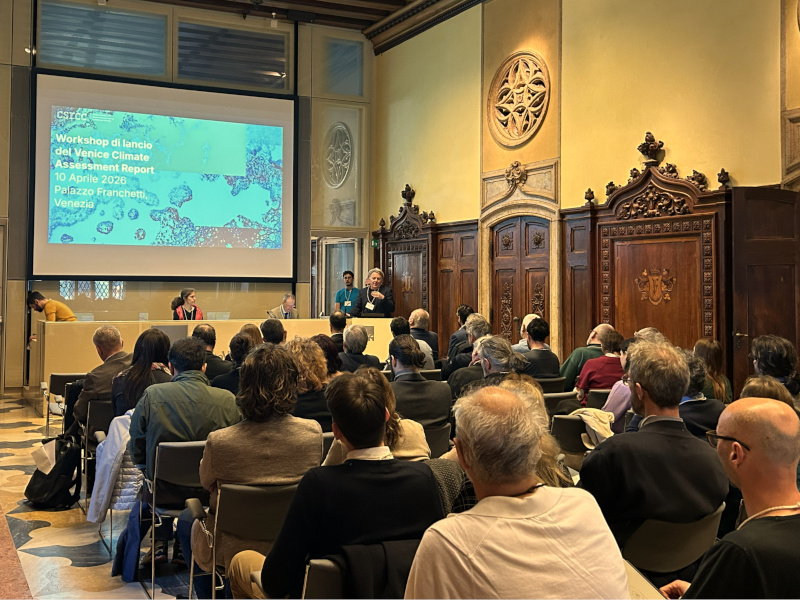
The Scoping Workshop of the Venice Climate Assessment Report (VAR), held on 10 April 2026 at Palazzo Franchetti, brought together 73 participants, including 9 decision‑makers (affiliated with the Veneto Region, the City of Venice, the Consorzio di Bonifica Acque Risorgive, the Consiglio di Bacino Laguna di Venezia, and the Port Authority), 46 scholars from different disciplinary fields (affiliated with Ca’ Foscari University, IUAV, CNR, Thetis, CMCC, VIU, CORILA, the University of Padua, ISPRA, and ARPAV), 5 representatives of economic actors (representing VERITAS, ACTV, Confindustria, and ANCE), and 13 members of civil society and NGOs.
The event marked the official start of the VAR process, a transdisciplinary initiative coordinated by the CSRCC to systematise knowledge on climate impacts, risks, and response options for Venice and its lagoon. The workshop provided an open and constructive space for dialogue among the scientific community, public institutions, the private sector, and civil society, gathering essential contributions to define the report’s knowledge priorities and guide the next steps of the process.
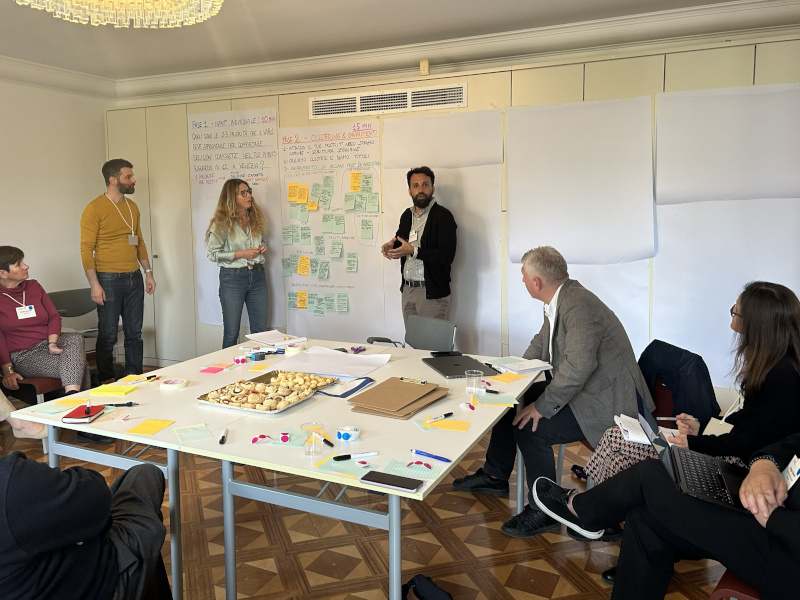
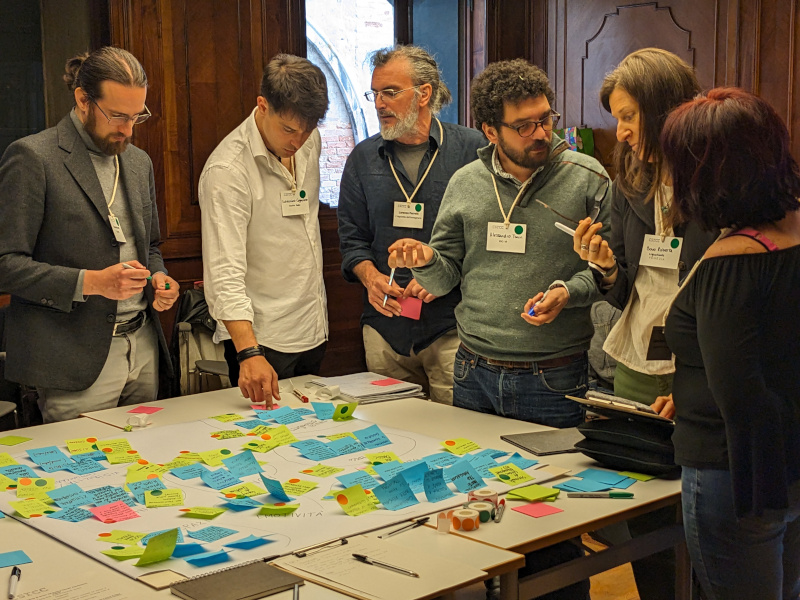
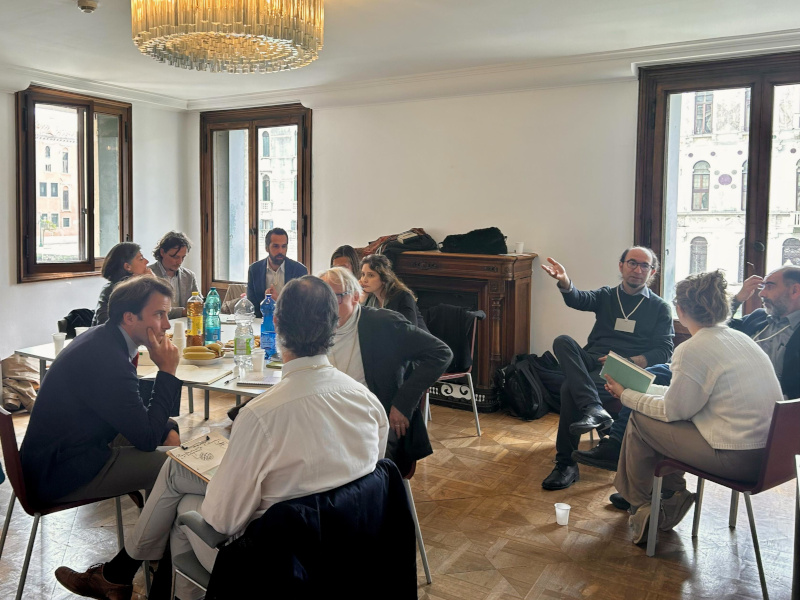
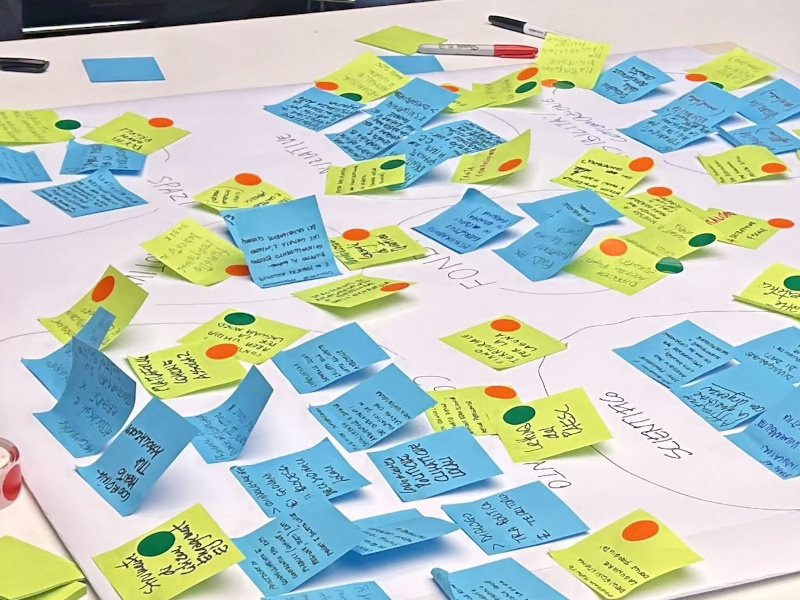
Photo gallery
- 8.30 - Participant registration
- 9.00 - Institutional greetings
- Carlo Barbante, President of CSRCC, Ca’ Foscari University of Venice
- Francesco Musco, Vice-President of CSRCC, IUAV University of Venice
- 9.30 - Introduction to the Venice Climate Assessment Report
10.30 - Breakout into working groups
Five thematic tables focusing on:
- Actors and territorial governance
- Needs and perspectives of the local community
- Priorities for the VAR
- Critical thresholds for Venice and the lagoon
- Transformation towards a sustainable future
- 12.15 - Plenary synthesis of group discussions
- 13.00 - Conclusions and next steps
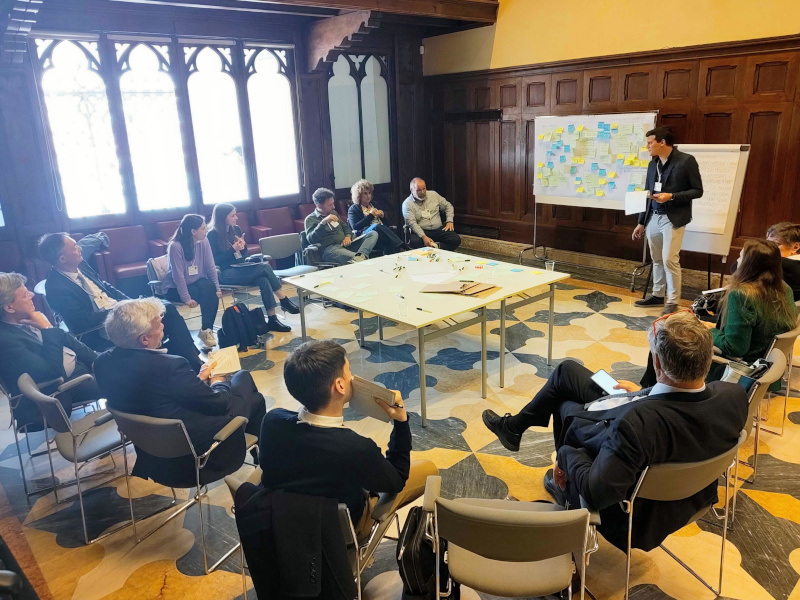
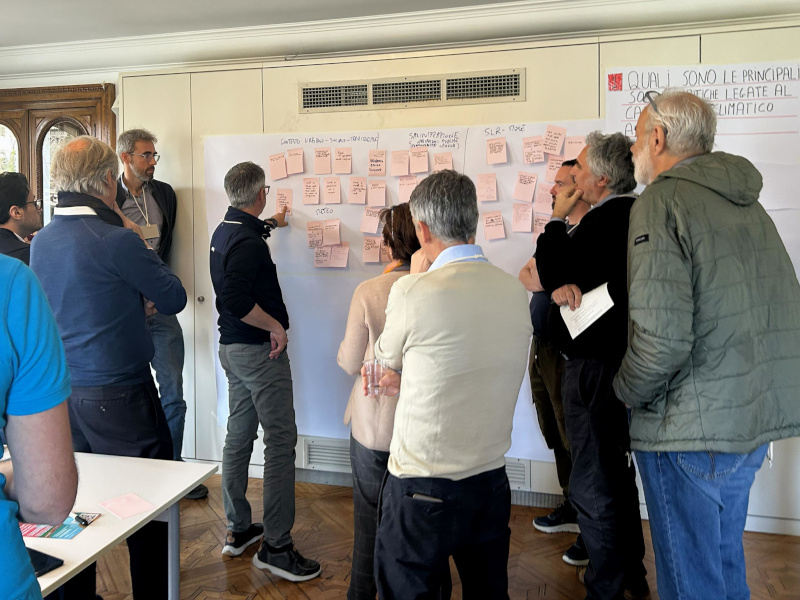
During the morning, the participants split into five Working Groups (WG), each focusing on a key theme for defining the scope and priorities of the VAR:
What are the main obstacles currently limiting effective climate action in Venice?
Working method
The group focused on identifying the main decision-making areas that participants are called to (or will have to) address to better prepare the Venice territory for climate change, as well as the main enabling and limiting factors that may facilitate or hinder decisions and their effectiveness. The responses were grouped into thematic clusters, for which possible solutions were discussed in order to overcome existing limitations and promote more effective climate-smart decisions for Venice, the lagoon, and the mainland area.
Summary of results
Despite the recognition of certain enabling factors (although they are currently not being adequately leveraged), the effectiveness of decisions and actions aimed at making Venice climate-resilient is hindered or reduced by the fragmentation and uncertainty of climate data at the local scale; by limited awareness and a lack of shared information regarding the impacts and urgency of climate change; by insufficient institutional and sectoral coordination; and by a short-term political perspective that fails to adequately balance private interests with the broader interests of the community for building a more resilient territory.
A more systematic organization of sources and a structured sharing of data related to climate variables and projections, together with proper communication regarding their levels of uncertainty, could support more informed decisions and increase public awareness of climate change, alongside educational and informational campaigns on the topic.
To be more effective, decisions aimed at tackling climate change should also benefit from multi-level governance frameworks capable of ensuring stronger institutional, sectoral, and administrative coordination and alignment, and that prioritise long-term strategies that balance more effectively private and public interests towards more adaptive and climate-resilient decisions.
What critical transitions could significantly alter the functioning of the Venetian and lagoon system?
Working method
The day's activities focused on analyzing critical thresholds, or tipping points, for Venice and its lagoon, adopting a structured methodological approach. The working group developed a sequential logical flow aimed at mapping the system's instability dynamics by operationalizing three key programmatic questions:
- Identifying Limits: Identifying the main critical thresholds directly linked to the impacts of climate change on the lagoon and urban territory;
- Analyzing Mechanisms: Defining the physical, ecological, and anthropogenic processes that regulate, accelerate, or delay the reaching of these limit values;
- Assessing Impacts: Defining the main environmental, structural, and socio-economic risks arising from crossing these tipping points.
This analytical framework made it possible to translate the complexity of climate phenomena into a matrix of cause-and-effect relationships, laying the foundation for defining management and adaptation scenarios for the lagoon system.
Summary of results
The analysis of the results highlights a clear polarization between two strategic visions: the static and conservative approach, oriented toward the strenuous defense of current morphologies and balances, and the transformative approach, which accepts morphological evolution and the progressive "marinization" caused by sea-level rise. This physical transition is closely intertwined with both the emergence of precise social thresholds and physical-natural thresholds, making the constant monitoring of demographic decline, the loss of essential services, and tourist pressure indispensable. Regarding social thresholds, through the use of specific indicators, such as the ratio between residents and tourists, it becomes possible to adopt effective countermeasures to prevent the city from emptying of its residential component and turning into an open-air museum. As for physical-natural thresholds, the critical turning points are divided into two distinct categories: internal and external factors. The former manifest on a local scale through seabed erosion, the loss of salt marshes, and variations in salinity, and are manageable through targeted local policies and interventions. The latter, of an exogenous nature such as rising seas and global economic dynamics, require systemic strategies on a much broader scale.
To ensure effective governance, the discussion highlights first and foremost the need to integrate the panel with experts in social sciences, humanities, and cultural heritage conservation. This inclusion aims to fill the current deficit in expertise observed at the working table and to structure future debates more comprehensively. Closely linked to this expansion is the preliminary explication of reference scenarios: the document must indeed require a clear definition of political objectives upstream — identifying whether the course of action is to protect, adapt, or transform the territory — before tolerable impact thresholds can be quantified and assessed.
On a methodological level, the development and adoption of new indicators and models that go beyond traditional parameters becomes essential. The discussion suggests the introduction of integrated socio-environmental metrics, capable, for example, of measuring the impact of depopulation on heritage maintenance, combined with predictive models able to capture cascade effects and cumulative feedback. Finally, this methodological framework must support a proactive role for science. The working table discussion suggests that the report should not merely photograph the current situation, but must translate technical complexity into concrete intervention options, thereby helping the scientific community promote climate literacy among the ruling class, with the fundamental objective of bridging the gap between scientific evidence and political action.
Which aspects should be explored in the VAR to respond to Venice’s decision‑making needs?
Working method
The group began by collecting individual priorities considered relevant for supporting concrete decision‑making on climate change in the Venice lagoon. These priorities were then grouped into thematic clusters and discussed collectively. Although the discussion was initially conceived as a prioritization exercise, it spontaneously evolved into a broader reflection on the main structural issues that currently limit the ability to understand, integrate, and use climate knowledge in the Venetian context. The work therefore focused primarily on identifying knowledge needs, operational constraints, and implications for decision support, with particular attention to the integration of data and scenarios, the translation of scientific knowledge into decision‑making tools, the systemic nature of climate risks, and the governance of adaptation.
Summary of results
The group highlighted that the main problem is not the lack of data or scientific knowledge, but rather their fragmentation and the difficulty of integrating them and making them truly usable in decision‑making processes. While acknowledging the existence of a large amount of available data, models, and tools, participants stressed the need to build more integrated knowledge systems capable of linking observations, monitoring activities, climate models, and future scenarios. This includes strengthening continuous monitoring systems and developing local scenarios that can effectively support management decisions.
The discussion also emphasized the need to address climate change through a genuinely systemic approach. Climate impacts were interpreted as the result of complex interactions among ecosystems, infrastructure, the economy, health, tourism, fisheries, cultural heritage, and governance. This made clear the limitations of overly sectoral or fragmented approaches. In this context, participants stressed the importance of considering indirect effects, trade‑offs, cascading impacts, and potential conflicts between different objectives, as well as the need to explicitly include currently underrepresented themes such as health impacts.
Another central element emerging from the group concerns the relationship between scientific knowledge and decision‑making. Participants noted that data and models, if not adequately translated, risk remaining of limited use to decision‑makers and stakeholders. This highlighted the need to develop more accessible scenarios, narratives, and interpretive tools capable of clarifying the implications of different adaptation choices and supporting more informed decision‑making processes.
Finally, the group underscored the importance of Venice’s historical, cultural, and environmental dimensions, which are essential for interpreting vulnerabilities, risks, and possible future trajectories of the territory. This led to the recognition of the need for more integrated, long‑term governance approaches, supported by participatory and transdisciplinary processes capable of bringing scientific knowledge, local expertise, and diverse visions for the future of the lagoon into dialogue.
How is climate change perceived and experienced by the local community?
Working method
We focused on identifying the relationships between the needs of local communities when coping with climate change, the related initiatives in the local areas, and the resulting risks. The method starts from individual reflection on needs, which were written on post-its and grouped into "clusters" of needs. A second group discussion phase brought out the initiatives and knowledge related to the need clusters, marking their presence or absence in the local areas, and the risks arising from the lack of an adequate response to the listed needs. The final phase involved an open discussion to summarize, compare perspectives, and reaffirm the key points.
Summary of results
The response from the local community highlighted a strong demand to improve the processes of communication, participation, and narrative around the current situation and ongoing changes. The lack of coordination between the municipality and the organizations operating in the area, the lack of spaces and opportunities for dialogue, the lack of clear and understandable explanations, the lack of tools and services for the community and for the protection of the lagoon ecosystem, the fragmentation of initiatives and their limited visibility and organization all risk increasing social erosion, distrust toward institutions, loss of biodiversity, but also loss of traditional knowledge and trades linked to the lagoon environment — and therefore very significant changes to daily life. A drive emerges to not limit the VAR to a simple final report, but to broaden the entire process by helping to increase, offer, improve and maintain, among other things:
- Opportunities for meeting, exchange and reflection among decision-makers, scientists and civil society;
- Different types of outputs at various levels that also include the intermediate stages of the project and that can be accessible to a wide range of people, entities and institutions (at the political, scientific, social and educational level)
Which factors and forms of knowledge are needed to trigger a sustainability‑oriented transformation?
Working method
The group worked with the Three Horizons method to explore the Venetian system over time through three key questions:
- describing the business as usual, distinguishing what currently hinders sustainability from what instead represents a valuable legacy;
- developing a vision of a sustainable future, identifying the values and forms of knowledge that characterise it;
- identifying the disruptive factors that can activate transformation, distinguishing those that reinforce the existing system from those that open new trajectories.
Summary of results
- Business as usual: the current system is marked by fragmented governance, sectoral approaches and a lack of coordination, which prevent a unified vision of the lagoon. Governance is often reactive, lacking anticipatory capacity, while an extractive economic model (overtourism, overexploitation, loss of common value) weakens the socio‑ecological system. Territorial asymmetries also persist between the historic city and surrounding areas (“Veneziacentrism”), alongside dependence on fossil fuels, technocratic approaches with little participation, and significant depopulation of the historic city. Alongside these criticalities, the lagoon territory still preserves a valuable heritage: local ecological knowledge, a strong sense of community, civic activism, a long history of co‑evolution between humans and the lagoon, and its role as an international experimental laboratory, together with the cultural, environmental and landscape values of the UNESCO World Heritage site.
- Values and forms of knowledge in a sustainable future: The envisioned future is one of a reconnected city‑lagoon system, managed in an integrated way and grounded in ecological and cultural diversity as a source of resilience. The lagoon is seen as a protected bio‑cultural system, where environmental well‑being supports the well‑being of human and non‑human inhabitants. This future is based on revitalised local knowledge, a widespread ecological ethic, and a social awareness that recognises the value of quality of life beyond tourism. Governance becomes shared, participatory and adaptive, guided by relational values, collective responsibility and anticipatory capacity—up to imagining the lagoon as a legal subject. Venice becomes a planetary laboratory for the convergence of knowledge, where sciences, humanities and the arts collaborate to anticipate problems and reinvent education. Finally, a diversified new economy emerges, linked to a renewed resident population, to cultural and scientific institutions, and to sustainable, conscious tourism.
- Disruptive factors: Transformation can be activated through strong investment in ecological and relational education, supported by a deep reform capable of overcoming the sectoral fragmentation of knowledge. Participation becomes a permanent infrastructure for inclusion, care of places and shared decision‑making. A new narrative of Venice, less self‑referential and more capable of integrating the historic city, lagoon and mainland, can open transformative pathways. The convergence of knowledge, including the environmental humanities, is seen as a tool for more informed and integrated decisions. Integrated lagoon management represents a turning point: choices such as the MOSE activation threshold can either support transformation or reinforce the business as usual. Finally, a renewed coordination of governance is needed to overcome individualism and isolated interventions, enabling participatory governance at a broader scale.
For more information, you can consult the full report of the five working groups.

During the workshop, participants converged on several strategic priorities to guide the development of the Venice Climate Assessment Report (VAR). They highlighted the need to integrate diverse forms of knowledge, strengthen institutional coordination, and make scientific information more accessible and usable for decision‑making. The recommendations below summarize the main orientations shared across the working groups.
- Integrate social sciences and humanities perspectives across all report Working Groups, including technically focused chapters.
- Develop a new, shared climate narrative for Venice and its lagoon, making scientific knowledge accessible and actionable for decision-makers and the broader public.
- Recognize, value, and integrate local knowledge and culture, which are seen as seeds for transformation towards sustainability.
- Make participation an essential component of the VAR process, promoting openness, meaningful public engagement, and dialogue between scholars, decision makers and civil society.
- Address the current lack of coordination and unified vision that limits effective climate governance and decision-making.
- Strengthen understanding of governance complexities and institutional interrelations that must be addressed to enable coordinated and effective climate action and decision-making.
- Highlight the role of education as a key lever for long-term transformation and resilience. A lever that requires a profound reform of how knowledge is learned and transmitted and moves beyond the compartmentalization of disciplines
- Bridge the gap between theoretical knowledge and practical implementation, integrating in the report forms of knowledge that reflect stakeholders’ practical experience and expertise, e.g.: sector-specific risks, protocols for the ordinary management of extreme events, and existing and planned incentives for adaptation.
- Examine sector-specific risks and impacts within a broader systemic framework, emphasizing interconnections, cascading effects, and integrated adaptation pathways.
- Provide a systematic and comprehensive synthesis of existing scientific information on climate observations, data, and projections for the Venice Lagoon area.
- Clearly acknowledge and communicate the uncertainties associated with climate data and projections.
- Create different types of outputs with different communication objectives, going beyond the production of a scientific report.